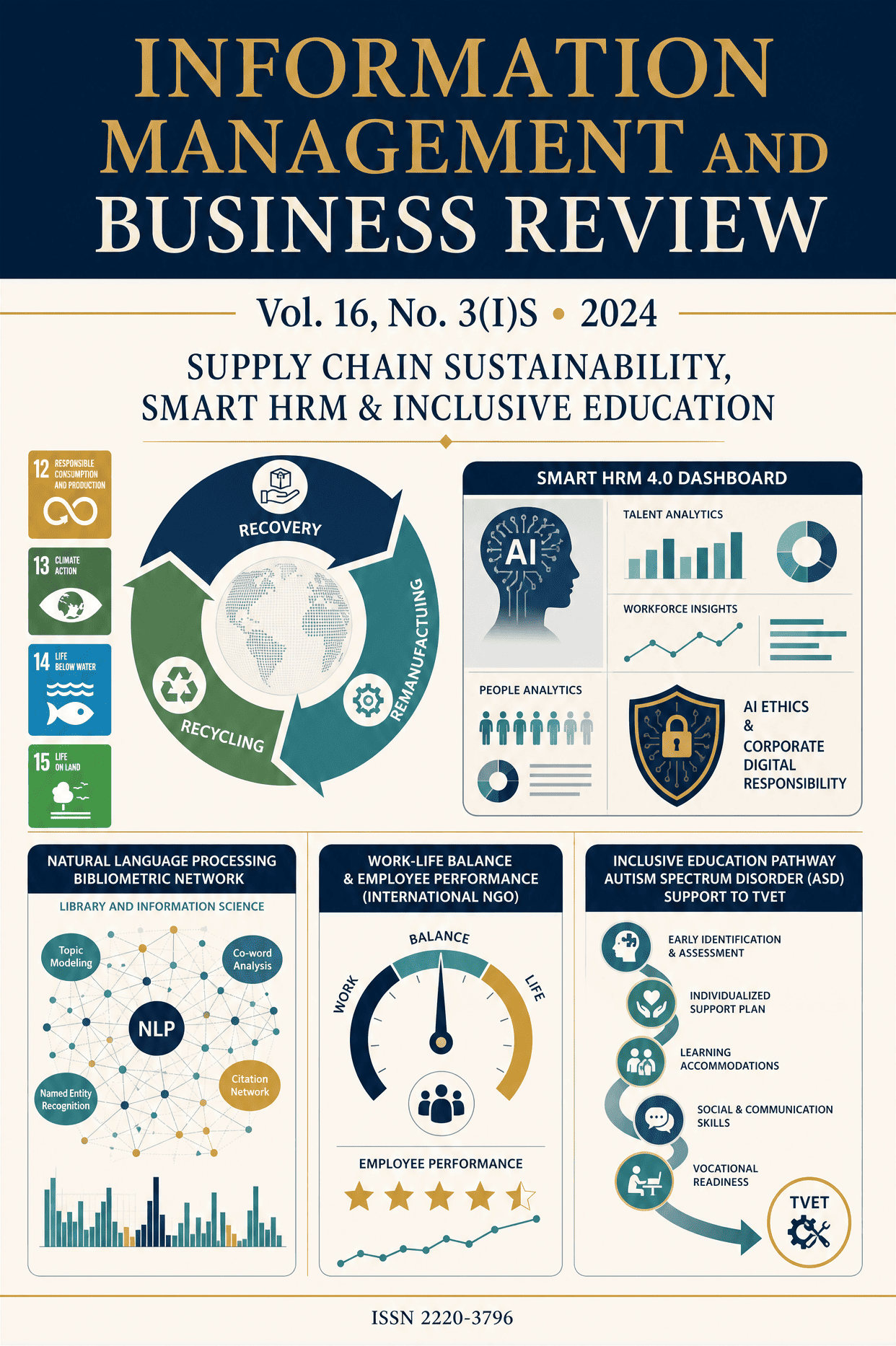
Articles 101–106 of 106

  • Article 101 in this issue

    Pathways to Sustainability: Empowering Indigenous Communities through Recycling Education

    • Author: Hafizah Hammad Ahmad Khan, Nabila Ahmad, Noorlailahusna Mohd Yusof, Azyyati Anuar, Azlyn Ahmad Zawawi, Shehu El-Rasheed

    Recycling is a critical component of sustainable waste management, helping to conserve resources, reduce pollution, and mitigate climate change. Despite its importance, awareness, and participation in recycling activities remain low, particularly among indigenous populations who often have limited exposure to modern environmental practices. This study investigates the impact of a recycling awareness program conducted within an indigenous community in Cameron Highlands, Pahang, Malaysia. The program included a preprogram survey to assess participants' awareness, understanding, and participation in recycling activities, followed by an educational session on general recycling practices and e-waste management. A post-program survey was conducted to measure the effectiveness of the program. Using paired sample t-tests reveals significant improvements in participants' knowledge and attitudes toward recycling. The findings provide compelling evidence that targeted educational programs can significantly enhance recycling awareness and participation within Indigenous communities, contributing to broader environmental sustainability goals. The study underscores the need for implementing similar programs in other less exposed communities and continuous engagement and collaboration with local authorities to sustain and expand recycling initiatives.

    Pages 1086-1093

    PDF - Pathways to Sustainability: Empowering Indigenous Communities through Recycling Education (opens in a new tab)
  • Article 102 in this issue

    Exploring Halal Nyonya Food Consumption Intention Among Tourists

    • Author: Asliza Mohd Yusof, Akmal Adanan, Mohd Adib Izzat, Mohamad Daim Darson, Puteri Danea Balqish Benne Saufie, Siti Aisyah Md Desa, Muhammad Aiman Hakim Md Nizam

    The topic of tourists' intention to consume Halal Nyonya food in Malaysia has garnered increasing attention in recent years. Nyonya cuisine, a unique blend of Malay and Chinese culinary traditions, has long been a hallmark of Melaka’s vibrant food scene. However, as Malaysia grapples with the diverse dietary needs of its growing tourism sector, the challenge lies in ensuring that Nyonya food offerings cater to the preferences of Muslim tourists seeking Halal-certified options. The main goal of this research is to explore and comprehend the preferences of tourists regarding the intention to consume Halal Nyonya’s ethnic food in Melaka. The study focuses on tourists' gastronomic choices, particularly as it relates to their intake of Halal Nyonya food. The study involves local and international tourists who have experienced Halal Nyonya food in Melaka in 2024. Data was collected through surveys, on-site observations, and interviews to understand factors affecting Halal Nyonya’s food consumption intention behavior. This research examines the association between independent and dependent factors that influence tourists from various geographical locations who visit Melaka to consume Halal Nyonya Nyonya food. It adds to the database of information already in existence by illuminating how tourists in Melaka from various locations approach and engage with Halal Nyonya's food. This deepens our comprehension of the dynamics of tourist preferences, cultural preservation, and culinary tourism. In conclusion, our research confirmed attitude, subjective norms, and perceived control will lead a tourist to have the intention to consume Halal Nyonya food.

    Pages 1094-1102

    PDF - Exploring Halal Nyonya Food Consumption Intention Among Tourists (opens in a new tab)
  • Article 103 in this issue

    Natural Language Processing (NLP) Application For Classifying and Managing Tacit Knowledge in Revolutionizing AI-Driven Library

    • Author: Wan Ainol Mursyida binti Ahmad Tarmizi, Asma Nadia Zanol Rashid, Nur Areena Aqilah Muhammad Sapri, Mani Yangkatisal

    The rapid evolution of technology has transformed library systems, with Natural Language Processing (NLP) emerging as a pivotal tool for enhancing knowledge management. This study aims to examine how NLP can improve the classification and management of tacit knowledge within AI-driven libraries, addressing the challenge of handling large volumes of unstructured data. The objective is to explore how NLP can optimize the retrieval, organization, and access to tacit knowledge, thus enhancing decision-making processes in libraries. The research adopts a conceptual design, synthesizing existing literature and theoretical models, including Information Processing Theory and Constructivist Theory, to propose a framework that integrates NLP with traditional knowledge management practices. Methodologies include a thorough review of recent advancements in NLP technologies and their applications within knowledge management systems. The study’s findings demonstrate that NLP significantly improves the accuracy and efficiency of knowledge retrieval by automating the processing of natural language data. This allows better access to tacit knowledge, supporting more informed decision-making. The outcomes of the study are twofold: it enhances existing knowledge management frameworks theoretically, and it provides practical insights for libraries to leverage NLP for greater operational efficiency and improved user experience. The study also underscores the need for future research on the real-world application of NLP and its ethical implications, such as data privacy and algorithmic bias.

    Pages 1103-1119

    PDF - Natural Language Processing (NLP) Application For Classifying and Managing Tacit Knowledge in Revolutionizing AI-Driven Library (opens in a new tab)
  • Article 104 in this issue

    Exploring Gastronomy Tourism as Potential Halal Tourism Products: Preliminary Study of Tourist Perception on Baba Nyonya Cuisines

    • Author: Nor Asikin Shaharuddin, Akmal Adanan, Suhailah Kassim, Wan Effa Jaapar, Zatul Iffah Mohd Fuza

    Gastronomy tourism has gained prominence globally, offering local and international tourists unique experiences for their taste palettes. The demand for Halal food among Muslim tourists has significantly increased as more people seek authentic and culturally appropriate dining experiences when travelling. This paper examines gastronomy tourism from the perspective of Islamic tourism, focusing on the Baba Nyonya cuisine; a combination of Chinese and Malay flavors as a viable Halal tourism product, aligned with the growing demand for Halal-certified options in the tourism industry. Factors of Halal certification, cultural familiarity, food awareness, and involvement, were explored. A structured survey was distributed to 385 tourists around Banda Hilir, Melaka, to explore Baba Nyonya cuisine's potential as a gastronomy tourism attraction. Baba Nyonya cuisine was found to be a promising attraction for Halal-conscious tourists. Interestingly, the Baba Nyonya cuisine appealed more to non-Halal food enthusiasts compared to a Halal option among Muslim tourists, since few of the Baba Nyonya restaurants were not Halal certified. This study underscores opportunities to increase the variety of Halal-certified foods and provide insights for travel marketers and local cuisine operators to capitalize on Baba Nyonya cuisines, thus pinning Malaysia as a leading destination for Halal gastronomy tourism.

    Pages 1120-1132

    PDF - Exploring Gastronomy Tourism as Potential Halal Tourism Products: Preliminary Study of Tourist Perception on Baba Nyonya Cuisines (opens in a new tab)
  • Article 105 in this issue

    Digital Supply Chain and Business Performance: The Case of the Oil and Gas Industry

    • Author: Anis Jusoh, Rosman Mahmood, Zuriyati Ahmad, Ahmad Suffian Mohd Zahari

    A competitive global business competition requires a firm to formulate a competitive strategy in supply chain management. The transformation from manual to digital management is also necessary for the oil and gas industry. A digital supply chain is a management approach that uses technology to manage the flow of goods, information, and finance across the entire supply chain. This study attempts to evaluate the impact of the digital supply chain on business performance in the oil and gas industry. The study sample was 523 PETRONAS staff members who were involved in operating two main units, namely, a gas processing and oil refinery. The results of multiple regression analysis found that the digital supply chain significantly and positively influences firm performance across the three study samples, namely gas processing, oil refinery, and the overall sample. Technology-driven supply chain management has had a significant positive impact on every aspect of the supply chain. This can be observed in enhanced efficiency, improved visibility, time savings, and increased company competitiveness. Nonetheless, the influence of the digital supply chain is not absolute because other factors such as communication, competence, transparency, and training empirically affect the firm's performance. All of these factors are complementary to the effectiveness of digital supply chain implementation. In line with this, steps are being taken to optimize digital applications across all aspects of the supply chain, along with certain elements related to human capital, to create a unique resource capable of fostering competitive advantage and enhancing firm performance.

    Pages 1133-1145

    PDF - Digital Supply Chain and Business Performance: The Case of the Oil and Gas Industry (opens in a new tab)
  • Article 106 in this issue

    A Critical Analysis of Science And Technology’s Impact on The Re-Evaluation of Iddah From Al-Taʿlīl Bi Al-Ḥikmah Perspective

    • Author: Md Azzaat Ahsanie Lokman, Muhammad Faidz Muhammad Fadzil, Izzah Nur Aida Zur Raffar, Muhd Imran Abd Razak, Mohd Farhan Abdul Rahman

    In contemporary Islamic discourse, there is an increasing emphasis on the role of wisdom in determining Islamic law due to its significant connection with the concepts of ʿillah and Maqasid Shariah. This discussion in Uṣūl al-Fiqh is known as al-Taʿlīl bi al-Ḥikmah. Additionally, the rapid advancements in modern science and technology are recommended for integration into contemporary Islamic legal research. Thus, exploring the intersection of wisdom and science is crucial. One of the issues that is often a concern in responding to the relationship between wisdom and science within Islamic law is the rule of iddah. This study aims to investigate the relationship between the rule of iddah and its underlying wisdom, as well as the role of science in realizing this wisdom and its impact on legal rulings. A qualitative approach was employed, using document analysis of both classical and contemporary writings on the rule of iddah. The analysis was conducted inductively to identify the principles of al-Taʿlīl bi al-Ḥikmah, which form the primary framework for examining the iddah issue. This study finds that if the use of wisdom and science in determining Islamic rules aims at realizing the objectives of the Shariah, performed by its guidelines, then it conforms with the requirements of Shariah and achieves Maqasid Shariah.

    Pages 1146-1155

    PDF - A Critical Analysis of Science And Technology’s Impact on The Re-Evaluation of Iddah From Al-Taʿlīl Bi Al-Ḥikmah Perspective (opens in a new tab)